The “Catherine Day” Report
A valuable contribution to the long-overdue changes advocated by R&D —
WITHOUT reopening the Staff Regulations
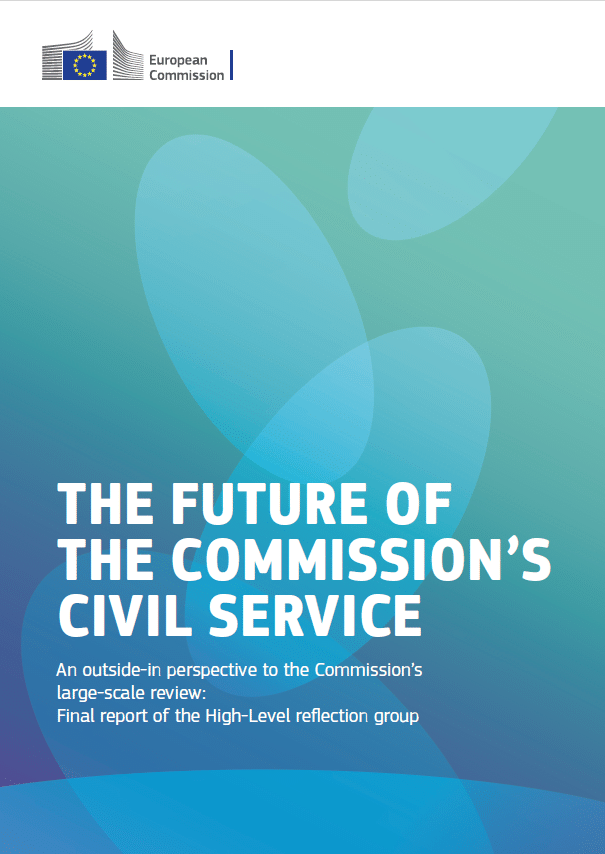
The publication of the report of the High-Level Reflection Group for the future of the European Civil Service, chaired by Catherine Day is an important and welcome contribution to the debate on the future of the European Commission’s administration.
Unlike some previous high-level group reports, which paved the way for changes to the Staff Regulations with profoundly damaging consequences for the very European civil service they claimed to defend, this report reflects a genuine commitment to our European civil service and a determination to protect its fundamental principles against the attacks and pressures it faces from various quarters.
We particularly welcome the fact that the report works within the existing Staff Regulations and does not propose reopening them.
Equally essential is an unequivocal reaffirmation of the principles governing the European civil service: independence, impartiality, competence, integrity, equal treatment, merit-based recruitment, appointments and promotion, and loyalty to the institution in the service of the European Union’s general interest.
It advocates much-needed changes, many of which reflect demands R&D has consistently championed for years.
However, past experience calls for the utmost vigilance against any attempt to distort or selectively exploit the Day report’s recommendations. R&D will oppose their use to weaken statutory guarantees, undermine the permanent character of the European civil service or increase job insecurity.
We fully agree that defending the status quo is neither credible, nor desirable.
The Commission must be able to adapt its structures, working methods and resources to meet increasingly complex challenges. The risks associated with change must be properly assessed and addressed but must not become an excuse for inaction.
Necessary changes must never become a pretext for unchecked discretion, political interference or the erosion of the fundamental principles governing the European civil service.
Openness to change must be accompanied by rigorous scrutiny of the legal implications of each proposal. A willingness to embrace change must not lead to naive approaches or proposals whose legal implications have not been properly considered.
Reopening the Staff Regulations must be absolutely refused as it would entail substantial and unpredictable risks
The Commission may exercise its right of legislative initiative, but it cannot unilaterally determine the final text. Under Article 336 of the Treaty on the Functioning of the European Union (TFEU), the European Parliament and the Council act as co-legislators under the ordinary legislative procedure, following consultation of the other institutions concerned.
It would therefore be irresponsible to assume that amendments would remain confined to the Commission’s initial objectives or that existing safeguards protecting staff would necessarily be preserved.
One Commission must mean ending administrative silos and feudal practices
One of the report’s most welcome features is the recognition of the need to overcome administrative fragmentation and the entrenched “silos” mentality within the Commission.
Commission staff serve the institution and European citizens. They do not belong to individual Directors-General, nor should their careers depend on the personal discretion of whichever senior manager happens to be in office.
R&D has long warned that decentralising managerial responsibility without effective central oversight risks entrenching departmental silos. In our view, that imbalance formed part of the damaging legacy of the disastrous 2004 revision of the Staff Regulations.
It is deeply demotivating for staff to see senior managers who, on taking up a new assignment, appear to arrange for former close collaborators to follow them into posts in their new Directorate-General, or in agencies and offices under their responsibility. Such situations raise particular concerns where the new assignment involves a substantially different policy area, with little apparent connection to those collaborators’ previous expertise.
Staff are not part of a Director-General’s personal entourage, to be moved from one post to the other as their manager’s career progresses.
Even when individual appointments formally comply with the rules, the perception that promotion and career advancement depend on personal networks and allegiances undermines motivation and trust in the institution. The Commission cannot afford either of these.
Putting an end to “silos” must therefore also mean preventing informal patronage networks from turning departments, agencies and offices into extensions of senior managers’ personal spheres of influence. Human resources, career opportunities and administrative responsibilities must be allocated in the interests of the Commission as a whole.
The report’s emphasis on cross-DG cooperation, mobility, shared institutional objectives and a more effective allocation of resources is consistent with the positions R&D has defended for years. We particularly welcome this convergence but at the same time we must ensure that all individual colleagues need to have clear managerial lines, tasks, objectives and deliverables.
No authority without responsibility, and no responsibility without accountability
Stronger central governance requires accountability and empowered central services
For years, R&D has called for stronger central services capable of ensuring institutional coherence and preventing quasi-feudal structures within individual Directorates-General.
Stronger central governance can help overcome fragmentation, ensure consistent decision-making and prevent managerial abuses.
The proposals to strengthen the Secretariat-General nevertheless raise important questions about the concentration of administrative power.
Any concentration of decision-making powers must be accompanied by a clear allocation of legal responsibility, clear accountability and effective checks and balances.
Authority must be formally conferred, decisions must be traceable and responsibility must be clearly assigned. Informal influence cannot be allowed to determine decisions while leaving others to bear the consequences.
Those who exercise decision-making authority must be accountable for its exercise.
Stronger central governance must extend beyond the Secretariat-General. It must also strengthen the other central services, particularly DG HR and DG BUDG, within their respective areas of responsibility.
DG HR must have the authority and resources to ensure consistent application of staff rules, protect staff rights and prevent human resources management from becoming an instrument of arbitrary or personalised power. It must make effective use of the powers available to it in relation to offices and agencies within its remit.
DG BUDG must provide effective guidance, assistance and institutional support to colleagues with financial and budgetary responsibilities. Their duty to ensure compliance with the applicable rules may require them to resist internal pressure to be more “flexible”.
We therefore welcome the report’s distinction between areas where flexibility and experimentation could be encouraged and those requiring strict compliance, including budgetary spending and financial management.
In this context, the ongoing negotiations on reaffirming the obligations arising under Article 22a of the Staff Regulations and ensuring both protection and institutional recognition for colleagues who report matters under that provision are also particularly important for safeguarding sound and legally defensible financial management within our institution.
Where it becomes apparent that staff cannot obtain such support and protection within their own Directorate-General, central services must be able, at all times and in all circumstances, to support and protect them in the lawful and independent exercise of their professional responsibilities.
Centralisation must not replace fragmented arbitrariness with centralised arbitrariness.
Artificial intelligence: keeping human dimension at the heart of change
R&D welcomes also the report’s emphasis on a responsible, human-centred approach to artificial intelligence. Its recommendations on assessing impacts on staff rights, maintaining human accountability and investing in skills reflect a principle R&D has consistently defended: people must remain at the heart of change.
The report proposes a Commission-wide Chief AI Officer and an AI officer in each DG, an AI assistant for every staff member, and better sharing of institutional knowledge with safeguards for sensitive data. It also recommends prior assessments of risks and impacts on rights for AI systems used in decisions affecting citizens or staff, controlled pilot projects, annual performance indicators, and procurement requirements covering transparency, explainability, security and data governance.
Colleagues’ concerns about the consequences of AI for their work and careers deserve clear answers.
The report also envisages changes to tasks and redeployment. These implications must be discussed openly with staff and their representatives.
For R&D, the human dimension must translate into concrete commitments: meaningful and honest social dialogue, staff involvement, adequate training accessible to everyone, protection of personal data, and respect for employment rights and working conditions.
AI assistants should help colleagues use their expertise, reduce repetitive work and improve the quality of the public service. Their introduction must be accompanied by the time, support and safeguards needed to use them confidently.
Hybrid staffing: safeguarding a permanent European civil service and job security
The report envisages a hybrid staffing model combining permanent staff and temporary expertise. The objective of providing the institution with greater flexibility and access to specialist expertise is, in itself, understandable.
For R&D, this model must preserve the permanent character of the European civil service and must not open the door to greater job insecurity.
Recruitment on non-permanent contracts must fully comply with the principles of meritocracy, transparency and equal treatment. The specialised nature of a post may warrant tailored selection procedures, but cannot justify derogations from those fundamental principles.
Flexibility and access to specialist skills must complement a strong permanent workforce, safeguarding independence, continuity and institutional expertise.
Permanent staffing needs must be met through permanent posts.
The contribution of temporary and contract staff must be fully recognised through fair working conditions, clear career prospects and genuine opportunities to access permanent employment in accordance with the applicable rules.
Any changes must be developed through meaningful social dialogue, safeguard the rights of all staff and remain within the existing framework, without reopening the Staff Regulations.
Flexibility must not enable favouritism or political patronage
The same considerations apply to the greater flexibility advocated in the report.
More flexible administrative arrangements, more effective mobility and faster procedures may all be legitimate and desirable objectives.
The principal danger lies less in the pro-posed measures themselves than in the opportunities their implementation could create for abuse, favouritism, or arbitrary decision-making.
Experience should make us particularly cautious about treating flexibility as an end in itself.
Few procedures have been more “flexible” or “faster” than the “parachuting” of cabinet members into senior management posts, particularly towards the end of a Commission’s term of office.
This is certainly not the kind of flexibility the European civil service needs, or its staff deserve.
This concern is particularly acute in relation to proposals to open more senior management posts to external candidates.
External expertise can bring real added value, but must not become a vehicle for politically motivated appointments or preferential treatment. Any such arrangement may be initiated only after a genuine and properly documented search for suitable internal candidates has been conducted, and where a clearly designated responsible person assumes ownership of, and accountability for, the decision to seek external expertise.
The decision must be supported by a reasoned justification and must be subject to transparent eligibility criteria, objective assessments of competence, equal treatment of candidates, appropriate management of conflicts of interest and effective independent scrutiny.
The same safeguards must apply to the proposed lists of pre-qualified senior management candidates and to any additional flexibility in recruitment or career management. Selection must be genuine and competitive.
Procedures must not be reduced to formal exercises endorsing predetermined outcomes.
Flexibility must serve institutional effectiveness while preserving safeguards against arbitrariness.
The independence of the European civil service depends on professional competence and merit prevailing over political proximity and personal allegiance
Effective institutional oversight and governance of Offices, Agencies and Joint Undertakings it what R&D has always requested
We strongly welcome the report’s call to review decentralised agencies and strengthen the Commission’s oversight.
It reflects longstanding concerns raised by R&D. Effective oversight must also be ensured for Offices and Joint Undertakings, taking account of their respective legal frameworks.
Fragmented governance can leave staff exposed to excessive managerial discretion without effective institutional protection. Colleagues in Offices, Agencies and Joint Undertakings must benefit in practice from the safeguards of the European civil service. They must not be treated as the personal subordinates of their Executive Directors.
However, calls for stronger oversight mean little unless the Commission exercises the powers and responsibilities it already has under the applicable legal frameworks.
The problem is not necessarily a gap in the existing legal framework. It is the failure to exercise the institutional authority and political determination needed to make that framework effective as shown lastly by two very bad examples:
- 1. The protracted and wholly unacceptable process for the adoption by decentralised agencies and joint undertakings (JUs) of rules to prevent and combat all forms of harassment
The protracted process of securing consistent implementation of the Commission’s anti-harassment decision across decentralised agencies and joint undertakings illustrates the shortcomings in current governance arrangements.
Nearly three years after the adoption of the Commission Decision of 12 December 2023 on the prevention of and fight against psychological and sexual harassment, the delays challenged by R&D remain unacceptable. Successive negotiations and compromises cannot become a permanent reason for delaying effective protection.
Article 110(2) of the Staff Regulations already establishes a framework for the application by analogy of Commission implementing rules to agencies, subject to the relevant notification, entry-into-force and derogation procedures. The Commission must use that framework effectively to secure timely decisions and meaningful protection for staff.
- 2. Call for full accountability for the Commission’s role in ITER
The lack of any meaningful response to staff representatives’ requests concerning the unacceptable procedures used to implement staff reductions at the ITER Organization is further evidence of a lack of political will to ensure effective governance.
Despite repeated requests from staff representatives, the position taken by the Commission’s representative in the ITER Council on contested decisions and unacceptable procedures surrounding the dismissal of dozens of colleagues remains unclear (link).
A joint reply from DG ENER, DG HR and the Deputy Secretariat-General (link) cites the limits on the Commission’s powers over ITER’s internal management. These limits do not answer our questions about how Euratom exercised its rights within the ITER Council. Under the ITER Agreement, the Council is responsible for the organisation’s overall direction and supervision and has important powers concerning staffing and HR rules.
Staff and their representatives are therefore entitled to know what position Euratom’s representative on the ITER Council took when these unacceptable procedures were proposed, how that position was coordinated and whether the necessary legal scrutiny was carried out within DG ENER and DG HR.
The scale of European funding reinforces these questions: Euratom’s indicative contribution for 2021–2027 was originally set at EUR 5.614 billion, while the Commission’s 2025 proposal for the 2028–2034 MFF envisages a further EUR 5.794 billion, both in current prices.
We still await a substantive response from Commissioners Serafin and Jørgensen: how can the Commission credibly defend such substantial further funding without providing clear answers about its own role in ITER’s governance? (link)
The budgetary authority and European taxpayers are entitled to credible assurances not only about accountability and the sound use of European funds, but also about respect for the fundamental principles and values underpinning European social law.
Conclusion
Several recommendations of the report reflect positions R&D has consistently advocated, and we welcome their explicit recognition.
What matters is both the stated purpose of changes and the legal and administrative conditions governing their implementation.
Good intentions are no substitute for enforceable safeguards.
Any package of changes must include clear rules on authority, responsibility and accountability and ensure transparent and merit-based selection, effective safeguards against conflicts of interest and favouritism, credible and independent internal controls, and effective administrative and judicial remedies.
Staff representatives must be fully involved throughout the process. Social dialogue must be substantive and capable of influencing decisions.
R&D is ready to engage constructively in ambitious improvements that strengthen the Commission’s ability to fulfil its mission. Our support depends on effective safeguards against abuses of power and a clear commitment to the independence, professionalism, integrity and permanent character of the European civil service.
“An ounce of good example is worth more than a hundredweight of words”[1]—and that goes for the Day Report, too.
The Commission does not need to wait to demonstrate its commitment to many of the principles advocated in the report.
It already has significant legal and administrative powers to strengthen accountability, break down silos, combat arbitrary management practices, apply the Staff Regulations properly and exercise effective oversight within its remit.
One convincing example of institutional action would carry more weight than hundreds of pages of declarations. The credibility of this process will depend on concrete decisions and their effects on staff and the quality of public service.
The best proof of a real commitment to improve is to start acting accordingly — NOW.
Cristiano Sebastiani,
Chair
[1] St. Francis de Sales